

Climate Change Response
Climate Change Risk and Opportunity Management
Good Way continuously pays attention to the impact of climate change on the global environment. To reduce greenhouse gas emissions, in addition to continuously promoting low-carbon operations and renewable energy transition, we cultivate environmental sustainability knowledge and sensitivity among employees in daily life. We first build correct concepts and attitudes, and on the other hand, strive to create an environment where employees can practice energy saving and carbon reduction in their daily work and life.
Climate Change Risk Governance
Purpose
The impacts of global climate change and extreme weather are intensifying. Good Way actively addresses potential risks and derived opportunities brought by climate change. Annually, we evaluate operational and financial impacts from extreme weather events and transition actions, as well as the identification, assessment, and management processes of climate risks. We implement PDCA and regularly disclose relevant information transparently to stakeholders. These strategies and risk management measures demonstrate the Company's forward-looking and systematic approach in responding to climate-related risks and opportunities.
Following the Net-Zero Transition Roadmap, Good Way actively participates in the Carbon Disclosure Project (CDP) and adopts and references the Task Force on Climate-related Financial Disclosures (TCFD) framework annually to strictly execute climate governance. This demonstrates our corporate responsibility and leadership in fulfilling environmental sustainability commitments.
Governance Structure and Responsibilities
The Board of Directors is the highest climate governance decision-making unit at Good Way, responsible for supervising climate-related risks and opportunities. It tasks the Risk Management Committee under the Sustainability Development Committee to assist the Board in executing related duties, supervising, and guiding Good Way's governance performance and target achievement regarding climate issues. This includes sustainability-related plans and performance, risk management status, carbon management strategies, identification results of climate change risks and opportunities, and setting climate-related targets.
Through annual regular Sustainability Development Committee meetings reviewing quarterly and annual sustainability governance performance, we ensure climate-related matters receive sufficient attention and management at the top management level. The Risk Management Committee regularly reports climate governance implementation results to the Board of Directors.
The ESG Office assists the Risk Management Committee annually in communicating climate issues with internal and external stakeholders, identifying response measures, and formulating execution strategies. It categorizes climate risk issues and evaluates materiality. The ESG Office annually reviews greenhouse gas emissions across all plant sites, regularly reports progress to the Sustainability Development Committee and the Board of Directors, and externally discloses target contents, metrics, and achievement status.
Additionally, the Audit Office organizes and executes internal audit activities annually. Internal Audit formulates the audit plan for the following year before the end of each year, executed upon Board approval, and reports audit findings to the Audit Committee. These internal audit activities ensure the implementation and execution of corporate sustainability policies (including climate issue management) across plant sites. Through cross-departmental collaboration, controls and procedures are integrated with other internal functions to support oversight of climate-related risks and opportunities.
Climate Change Response Strategies
Climate Resilience: Climate-Related Scenario Analysis and Assessment
Good Way's climate change response strategy follows the TCFD framework and disclosure requirements in the CDP Climate Change questionnaire. Combined with the International Energy Agency (IEA) Sustainable Development Scenario (SDS) and Stated Policies Scenario (STEPS), as well as IPCC AR6 global warming levels (GWL 2°C and 4°C) and greenhouse gas emission scenarios (SSP2-4.5 and SSP5-8.5), we utilize the National Science and Technology Council's "Taiwan Climate Change Projection Information and Adaptation Knowledge Platform" and the World Bank "Climate Change Knowledge Portal" to assess flood and rainfall hazard vulnerability. This identifies major physical and transition risks, opportunities, and potential financial impacts under these climate scenarios across Good Way's operational sites (including HQ, Taipei Plant, Kunshan Plant, Vietnam Plant) and value chain, formulating response strategies and targets for continuous tracking and management.
- Impact Assessment: According to scenario analysis results, the Company experiences no significant impact under the middle-of-the-road emissions scenario (SSP2-4.5). However, under the extremely high emissions scenario (SSP5-8.5), in the long term, certain plants (primarily located in Taiwan and Vietnam) may face high flood risks due to heavy rainfall and sea-level rise, potentially causing production equipment damage and operational disruption.
- Resilience Capacity: The Company formulates response plans based on scenario analysis results and regularly evaluates execution outcomes through risk management procedures to refine response strategies.
- Referencing the CDP climate change questionnaire framework and domestic/foreign climate-related reports, the evaluation scope covers products and services, supply chains, adaptation and mitigation activities, R&D, and operations.
- Based on climate change scenarios regarding regulation, market, technology, reputation, and physical aspects, 5 risk issues and 4 opportunity issues impacting operations were identified.
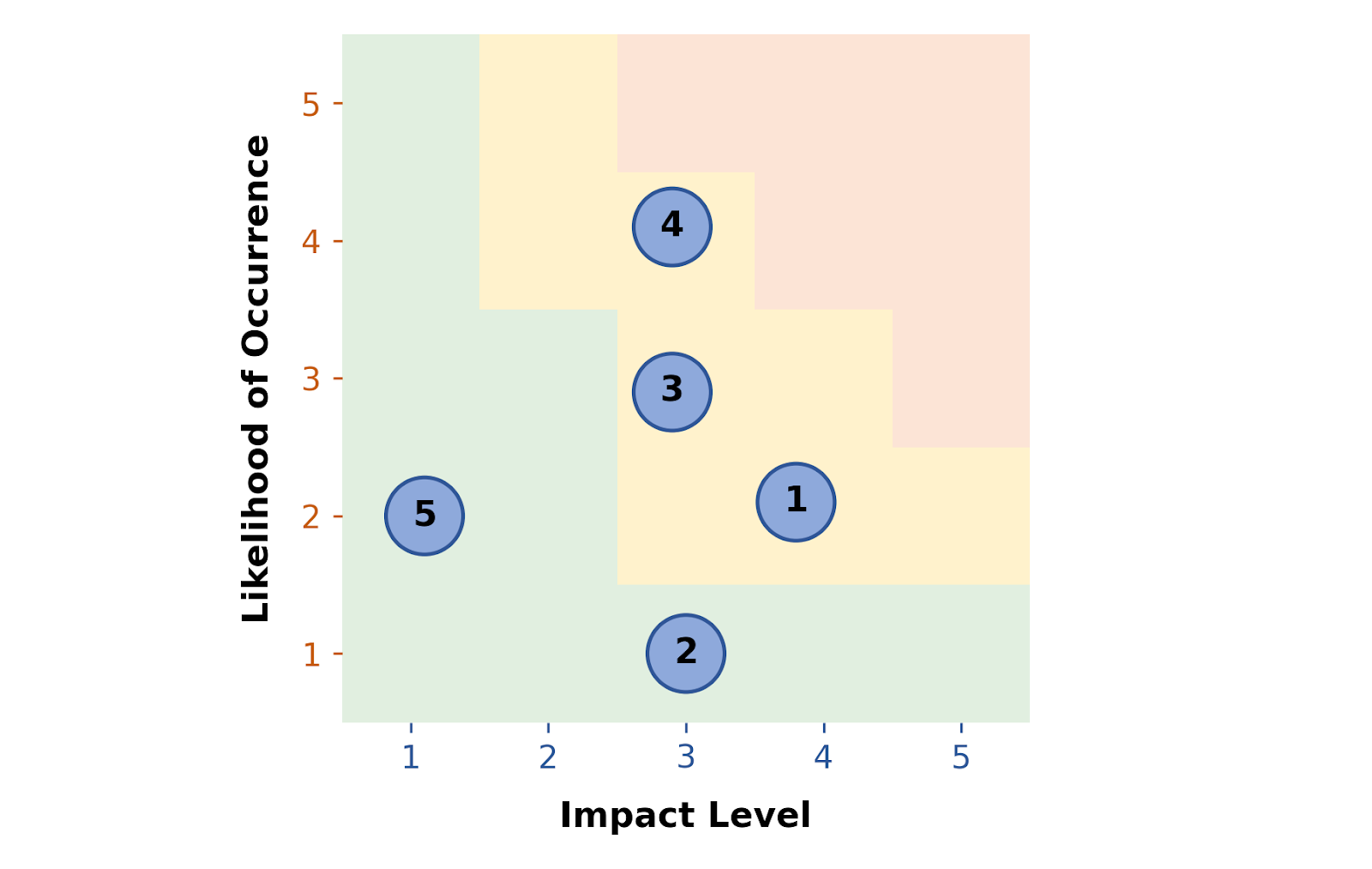
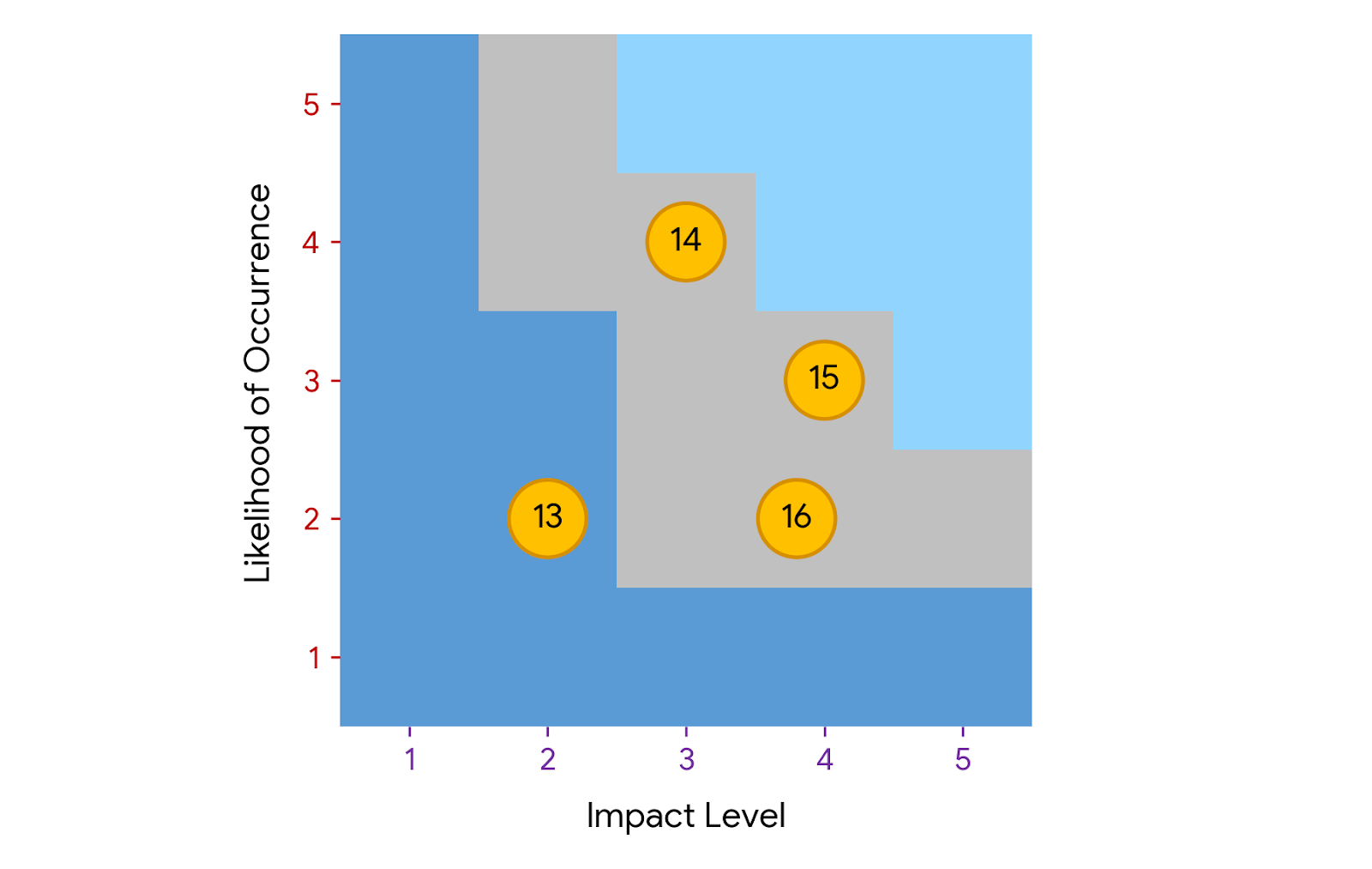
- In accordance with risk management procedures, priority ranking is established by multiplying "Likelihood" and "Impact Level" scores for each potential risk and opportunity item, with critical climate risks/opportunities confirmed and approved by the Sustainability Development Committee.
Climate Change Risk Management
The Company has established the "Enterprise Risk Management Policies and Procedures" to achieve risk management objectives. The risk management process includes risk identification, risk analysis, risk evaluation, risk response and monitoring, and risk reporting and disclosure. The risk assessment process incorporates qualitative and quantitative factors, considering the nature, likelihood, and degree of impact of potential risks. Good Way executes climate-related risk and opportunity identification every two years and aligns this mechanism with the Enterprise Risk Management (ERM) system, re-examining results annually to ensure alignment with current conditions.
Identification, assessment, and ranking of climate-related risks and opportunities in 2025 are detailed below.
Identification of Climate-Related Risks and Opportunities
Assessment, Analysis, and Ranking of Climate-Related Risks and Opportunities
Risk Assessment, Analysis, and Ranking
| Category | No. | Risk Item | Classification | Risk Level |
|---|---|---|---|---|
| Climate | 1 | Asset or operational losses caused by extreme weather events such as typhoons and heavy rainfall | Physical Risk | M |
| Climate | 2 | Sea-level rise | Physical Risk | L |
| Regulation | 3 | Carbon pricing mechanism - Carbon fee / Carbon tax collection | Transition Risk | M |
| Market | 4 | Changes in customer behavior - Market preference toward energy-saving and low-carbon products | Transition Risk | M |
| Technology | 5 | Cost of low-carbon technology transition | Transition Risk | L |
Opportunity Assessment, Analysis, and Ranking
| Category | No. | Opportunity Item | Classification | Opportunity Level |
|---|---|---|---|---|
| Reputation | 13 | Impact on corporate image | Opportunity | L |
| Other | 14 | Development of innovative products/services and emerging markets | Opportunity | M |
| Regulation | 15 | Improvement in energy efficiency | Opportunity | M |
| Technology | 16 | Low-carbon products or services | Opportunity | M |
Climate-Related Risks and Opportunities Impacting Corporate Sustainability
After identifying climate-related risks and opportunities reasonably expected to impact corporate sustainability, the Company further evaluates potential impacts on business models and upstream/downstream value chains.
Time Horizons of Expected Climate Risks and Opportunities Impacting Company Outlook: Definition and Alignment with Strategic Decision-Making Horizons
The Company categorizes expected time horizons for climate-related risks and opportunities into "Short-term," "Medium-term," and "Long-term," as detailed below:
| Period | Definition | Alignment with Strategic Decision-Making |
|---|---|---|
| Short-term | ˙Under 2 years ˙2025 to 2026 | The planning cycle for major company decisions is reviewed and adjusted on average every two years. |
| Medium-term | ˙3 to 4 years ˙2027 to 2030 | Strategic corporate decisions usually demonstrate significant results within four years. |
| Long-term | ˙5 years and above ˙2031 to 2050 | The Company actively aligns with the national "2050 Net-Zero Emissions Roadmap," relevant policies, and brand client requirements, striving to achieve net-zero emissions by 2050. |
Metrics and Targets
The Company's climate-related financial disclosures regarding metrics and targets include climate-related metrics, greenhouse gas information, industry-based metrics, climate-related targets, and progress toward any targets required by regulations.
The governance body and management evaluate action progress on climate-related risk and opportunity issues through the following metrics, establishing phased quantitative targets to progressively achieve the strategic goal of "2050 Net-Zero Emissions." This goal aligns with the Paris Climate Agreement objective of limiting global temperature rise to within 1.5°C above pre-industrial levels. Targets set apply to the consolidated company overall (including parent company and subsidiaries), with execution expected through 2050.
| Strategic Target | Metric | Target | Purpose of Target | Target Type | 2025 Status and Performance Trend | Corresponding Chapter |
|---|---|---|---|---|---|---|
| Achieve Net-Zero GHG Emissions by 2050 | Greenhouse Gas Emissions | With 2024 as the base year, reduce emissions by 3% annually, achieving a 30% reduction in total overall GHG emissions by 2030. | GHG Emission Reduction | Quantitative - Absolute & Intensity Targets | In 2025, Scope 1 and Scope 2 GHG emissions increased by 42.10% compared to the base year. For details, refer to "6.3.1.1 Scope 1 & Scope 2 Emissions Performance and Variance Analysis." | 6.3 |
| Renewable Energy Usage Ratio | With 2024 as the base year, increase green electricity / clean energy usage ratio to over 40% by 2030; achieve RE100 target by 2050. | GHG Emission Reduction | Quantitative - Intensity Target | As of the end of 2025, green electricity usage at the Kunshan production base reached 42.21%, while overall group green electricity usage stood at 18.83%. Through renewable energy installation and REC purchases, the RE100 goal is expected to be achieved by 2050. | 6.3 |
For Good Way's specific climate change response actions and details, please download Good Way TCFD Report_2025