

Material Topic Management
In accordance with GRI 3: Material Topics of the GRI Universal Standards, Good Way follows an impact-based materiality analysis process and adopts the concept of "double-materiality" proposed by the European Financial Reporting Advisory Group (EFRAG) to identify material issues and determine the boundary and scope of disclosure, serving as the foundation for setting long-term sustainability goals.
The Good Way Sustainability Development Committee has resolved to conduct a comprehensive material topic assessment process every two years. Considering stakeholder issues of concern, Enterprise Risk Management (ERM) procedures, and the Risk and Opportunity Matrix, six core topics with significant operational impact and financial materiality have been confirmed.
Material Topic Assessment Process
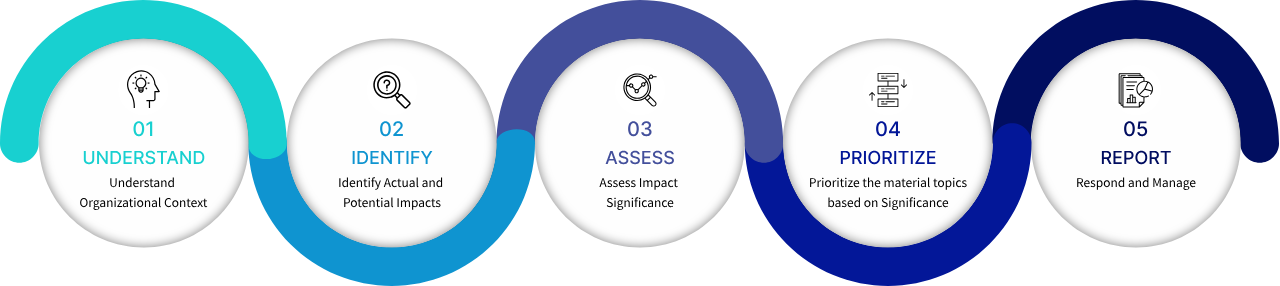
•Step 1: Understand Organizational Context and Gather Sustainability Issues
Reference international standards and frameworks (GRI, SASB, TCFD), SDGs, ESG rating agencies (MSCI, CDP), RBA Code of Conduct, as well as topics from upstream and downstream value chains, key customers, peers, and industry-specific context to compile potential sustainability issues covering Environmental, Social, and Governance (ESG) dimensions.
•Step 2: Identify Actual and Potential Impacts
○ Stakeholder Concern Survey: Distributed online questionnaires to collect the level of concern regarding designated issues from key stakeholders, including major customers, key tier-1 suppliers, management-level colleagues, shareholders/investors, industry associations, and regulatory authorities.
○ Operational Impact Assessment (Internal): Evaluates the degree of positive and negative impacts each topic may have on Good Way's sustainable development across four major dimensions: Enterprise Operations, Social Responsibility, Environment & Climate Change, and Governance, with management participation in the evaluation.
○ Sustainability Impact Assessment (External): Assesses the significance of Good Way's actual, potential, positive, and negative impacts on the external economy, environment, and people (human rights) regarding the management of various sustainability issues, with management participation in the evaluation.
•Step 3: Assess Significance of Impacts
Analyze materiality assessment scores (positive and negative impacts) alongside stakeholder concern levels.
•Step 4: Prioritize Impacts for Reporting
○ Impact Prioritization: Establish a weighted score threshold as the criterion for selecting material topics. Issues with weighted scores exceeding the threshold are prioritized and discussed based on double-materiality.
○ After comprehensive consideration by the Sustainability Development Committee, the core material topics are confirmed as the focus of management approaches and performance disclosure.
•Step 5: Response and Management
○ Review and Approval: Prioritized reporting topics are approved by the Chairman of the Sustainability Development Committee, with regular reports submitted to the Board of Directors regarding sustainability progress and topic identification results, culminating in formal Board approval to ensure management oversight of sustainability impacts.
○ Material Topic Management: Respond with company management approaches based on material topics, set targets and strategies, and conduct regular reviews and adjustments.
Summary of Core Material Topics and Management Strategies
The Company has selected six core topics based on the results of the double-materiality analysis, with designated departments formulating corresponding management strategies:
| Core Material Topic (GRI Standards) | Management Strategy and Response Summary |
|---|---|
| 1. Customer Relationship Management (GRI 418) | Efficiently respond to customer ESG requirements, enhance satisfaction, and solidify our position as a preferred partner for international brands. |
| 2. Product Quality (GRI 416) | Maintain high manufacturing quality standards, reduce customer complaints and repair costs, and reinforce long-term cooperation with international top-tier brand customers. |
| 3. Financial Performance (GRI 201, 207) | Increase capacity and diversify risks alongside the commercial operation of the overseas plant, enhancing resilience and revenue in the face of geopolitics. |
| 4. Supply Chain Management (GRI 308, 414) | Promote supplier RBA audits and carbon management training to build a resilient supply system that complies with international sustainability standards. |
| 5. Business Integrity (GRI 205) | Implement anti-corruption and legal compliance, build deep trust with internal and external stakeholders, and enhance corporate market value. |
| 6. Innovation and R&D Management (GRI 201) | Continuously develop green energy-saving and innovative products to satisfy market demand for sustainable products and create differentiated business opportunities. |
For annual stakeholder questionnaire statistics, the double-materiality impact ranking matrix, detailed financial/environmental/social performance data, and third-party assurance reports, please download and refer to the Good Way Group Annual Sustainability Report.